
Your main workplace may have a stocked first-aid kit and trained people nearby. What happens when an employee works alone somewhere else? A lone worker app can support contact, but first-aid arrangements still need to fit the task, location and working hours. Start by checking what the worker can actually access.
At a glance
- Assess first-aid needs where lone work takes place.
- Check equipment, training and access to assistance together.
- Make emergency contact instructions clear and practise them.
Start with the work, not the kit
HSE’s guidance for Great Britain explains that appropriate first-aid arrangements depend on the work and where it happens. Its needs-assessment guidance covers hazards, staffing and work patterns, and highlights travelling, remote and lone workers.
That calls for more than copying the office arrangements into a mobile-worker briefing. Consider the tasks, the distance from assistance and what happens outside normal opening hours. A kit at base cannot help someone who cannot reach it.
Check three parts of the arrangement
HSE’s lone-working guidance says the risk assessment may identify a need for equipment, first-aid training, including self-help, and access to suitable facilities. These are assessment decisions; the same course or kit will not suit every lone-working role.
- Equipment: what is needed, where is it kept, and can the worker reach it during the task?
- Training: what should the worker know how to do, within the limits of their training?
- Assistance: how will they summon help and explain where they are?
Practical example: a mobile upholstery repairer
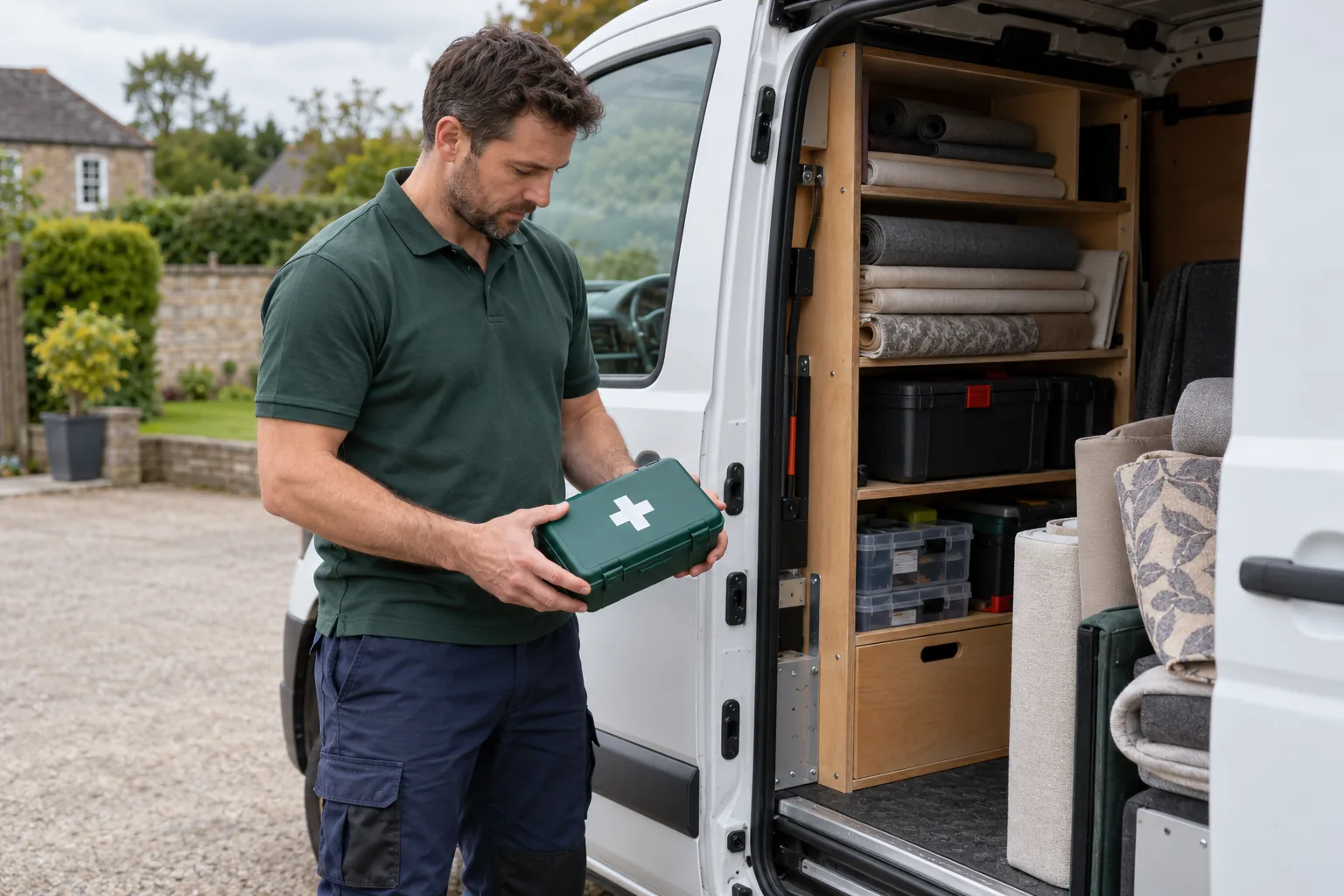
Consider an employee repairing furniture at several customer addresses. The business has first-aid provision at its workshop, but the worker spends most of the day away in a van. The manager is reviewing the arrangements before the next week’s visits.
The first question is whether the workshop plan covers this pattern of work. The manager could use the needs assessment to decide what personal equipment and training are appropriate, then agree a storage position that remains accessible when the van is loaded.
Before each visit, the worker could check that the agreed kit is present and report missing or used supplies through a clear replenishment process. The briefing should also cover the address, access arrangements and who to contact if help is needed. The business should not simply assume a customer will provide first aid.
Where LoneApp forms part of the agreed plan, the worker can add a brief task or location note to the activity and follow the company’s check-in timings. Those details can support the nominated responder. They do not provide treatment, guarantee assistance or make an unsuitable task safe to carry out alone.
Make the emergency instructions usable
HSE recommends emergency procedures that explain when and how lone workers should contact their employer, including emergency numbers. Practise the arrangements so the worker and responder know their roles before an incident.
LoneApp’s HELP control is held for three seconds to raise an alarm. Confirmation that LoneApp received it does not confirm that a responder has been reached. Follow your organisation’s emergency arrangements; if you are in immediate danger, call 999.
LoneApp does not replace risk assessment, safe working, first-aid provision or employer response arrangements. A staffed alarm receiving centre is not included.
Check one real working day
Next step: choose one upcoming lone-working task. Ask the worker to show where the first-aid equipment will be, explain how they would get help and identify any gap. Resolve it before the work starts.