
A familiar path can be a different working environment before sunrise or after dark. Before someone works alone, check how they will get from the parking area to the entrance and back. A lone worker app can support contact arrangements, but it cannot make an unlit or slippery route safe.
At a glance
- Check the route at the time it will actually be used.
- Assign responsibility for lighting, leaves and slippery surfaces.
- Agree when the worker should pause and seek advice.
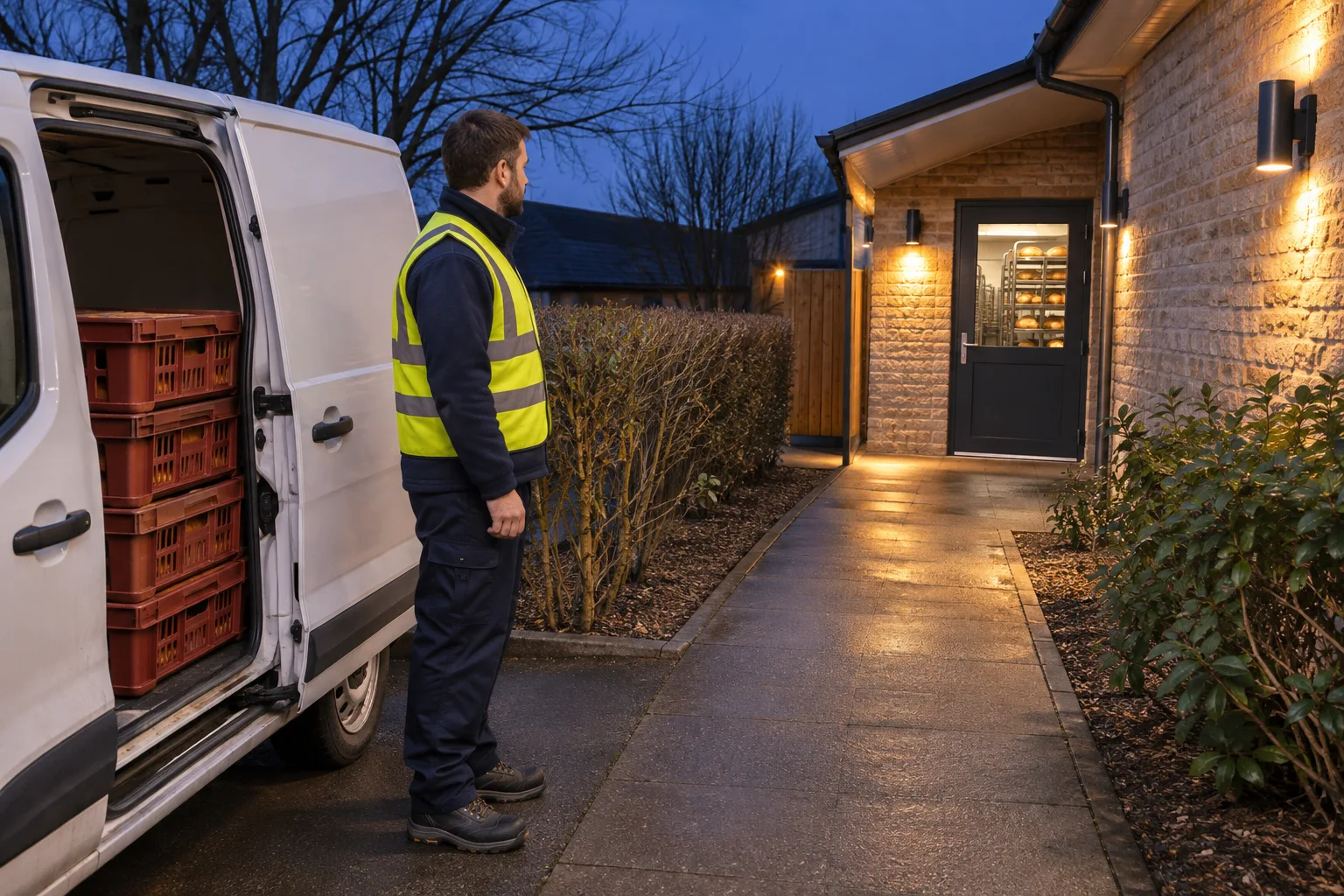
Look at the route in working conditions
HSE’s slips and trips guidance explains that too little light can hide hazards, while glare can also make them difficult to see. Rainwater, frost and ice can create slippery surfaces. These are practical points to consider in your risk assessment, not reasons to assume every dark shift is unsuitable.
Review the whole journey: parking place, pedestrian route, steps, entrance and return trip. Check whether lighting is on when the first worker arrives and remains available when the last person leaves. A daytime inspection alone may miss the problem.
Practical example: a bakery delivery before dawn
Consider a delivery employee arriving alone at a bakery before the production team starts. The agreed route runs from a small parking area along a paved path to a side entrance. A light timer set for later arrivals could leave part of that route dark.
Before arranging the delivery, the manager could check the path at the intended arrival time and arrange suitable lighting throughout the route. They could agree where the van should stop, how the employee should reach the door and who will check the path before early deliveries.
The worker’s instructions should cover what to do if the lighting fails or the route is slippery. For example, they could remain in a safe place and contact the nominated person before unloading. The manager could arrange a safe alternative or delay the delivery rather than expecting the worker to improvise.
If LoneApp forms part of the assessed plan, the worker could select the agreed activity, confirm its duration and add a brief location note. Scheduled check-ins could support contact during the task. The employer would still need responders available at that early hour and arrangements for reaching the worker.
The lesson is to prepare access before the delivery begins. Adding an alarm does not resolve the problem of an unsafe path.
Give seasonal checks an owner
HSE recommends regular removal of wet or decaying leaves, which can be slippery or conceal hazards. Decide who inspects the route, who deals with problems and how the worker learns that it is ready.
Where ice is a foreseeable risk, identify the affected areas and plan treatment or a safer route. HSE’s guidance notes that salt takes time to work. Do not treat a last-minute scattering of grit as confirmation that a path is safe. Keep people away from an unsafe route until suitable arrangements are in place.
Make the limit clear
HSE’s lone-working guidance for Great Britain recommends setting limits on what can be done alone and helping workers recognise when to seek advice. Put failed lighting and unsafe access into that briefing, alongside the contact number and alternative arrangements.
LoneApp does not replace risk assessment, safe working or employer response arrangements. A staffed alarm receiving centre is not included.
Check one early or late route
Next step: review one regularly used access route at the time a lone worker uses it. Agree who will fix any gap, then tell the worker what to do if conditions change.