
A familiar lone-working task can change with one request: could you move that before you finish? Before lifting, carrying, pushing or pulling, check whether the job still fits the agreed arrangements. A lone worker app can support contact, but it cannot reduce the physical demands of an awkward load.
At a glance
- Assess the handling task before deciding it can be done alone.
- Consider the load, route, equipment and person together.
- Make it clear when to pause and ask for a different arrangement.
Start with the task, not a weight limit
HSE explains that employers in Great Britain must avoid hazardous manual handling where reasonably practicable, assess unavoidable operations and reduce the risk of injury. The law does not set a single weight limit that makes a lift safe.
Weight is only one consideration. HSE’s assessment guidance also covers posture, carrying distance, frequency, grip, floor conditions and individual capability. A light but awkward object can still create a difficult task.
Do not use an employee’s willingness to try as the assessment. Check how the work will actually be done and what help or equipment the plan requires.
Practical example: moving a garden-centre planter
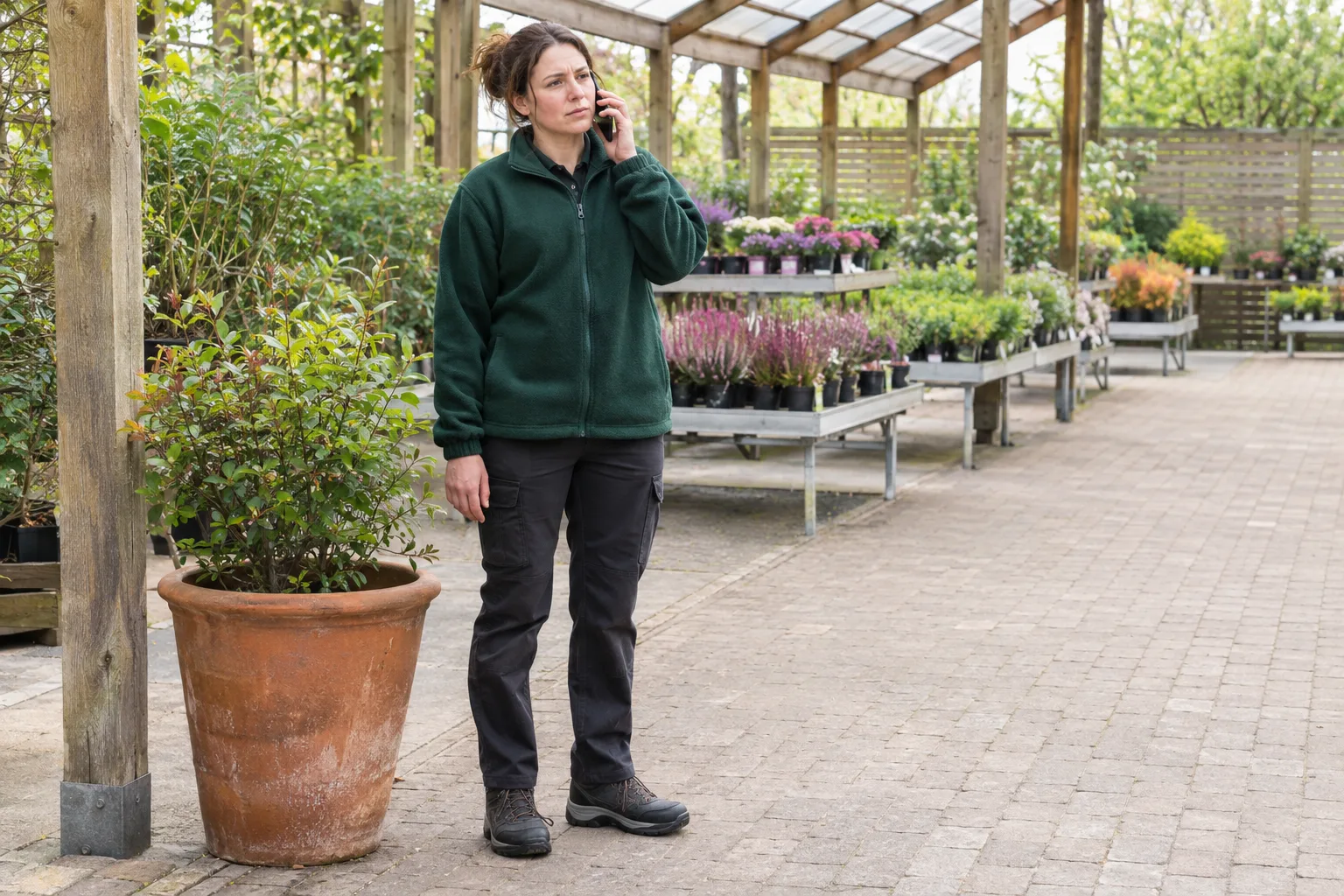
Consider a garden-centre employee working alone in a covered sales area before opening. Their agreed job is checking plant labels. A request comes through to move a large planted container to a different display.
The new request introduces a handling task that is not covered by the label-checking instructions. The worker could leave the planter securely where it is, pause that part of the job and contact the manager through the agreed advice route.
The manager could first check whether the planter needs moving at all. If it does, the review should cover its size, stability and grip, the proposed route and any suitable handling equipment. Simply saying that a trolley is somewhere on site would not establish a safe method.
Depending on the assessment, the move might need a different method, suitable equipment and trained staff, or rescheduling. Adding another person is not automatically a complete solution: the handling operation still needs planning.
Where LoneApp supports the original lone-working activity, the worker should continue following the agreed contact instructions while the manager decides what can proceed. Changing an activity note or selecting a preset would not authorise the new handling task. The lesson is to reassess the work before attempting it.
Make the limits easy to follow
Give workers specific instructions for the loads and tasks they encounter. A useful briefing should answer:
- Which handling tasks are covered by the assessment, and which need a further decision?
- What equipment and training are required, and what happens if either is unavailable?
- Who can approve a changed method or arrange assistance?
- What work can continue safely while the handling task is paused?
Use contact as support for safe work
HSE says handling technique is an addition to other controls, rather than a substitute for lifting aids or improvements to the task and environment. Likewise, more frequent check-ins do not make an unsuitable lift acceptable.
LoneApp lets workers select a saved activity, confirm the expected duration and add a brief task or location note. Managers set check-in timings and organise primary and backup responders. Those features support communication about assessed work; they do not assess a load or provide physical assistance.
LoneApp does not replace risk assessment, safe working or employer response arrangements. A staffed alarm receiving centre is not included.
Review one recurring move
Next step: choose one load your staff regularly move while alone. Walk through the task with them, check the assessment against real conditions and clarify when they should stop and ask for help. Resolve any gap before the next move.