
A signed induction sheet tells you someone attended a briefing. It does not show how they would handle an unexpected situation while alone. Before relying on a lone worker app, give the person a chance to demonstrate the arrangements. This LoneApp guide offers a practical way to check understanding.
At a glance
- Observe the person using the arrangements, not just reading them.
- Practise decisions as well as phone controls.
- Resolve gaps before authorising the assessed lone-working tasks.
Start with the person and the job
HSE’s guidance for Great Britain says supervision should reflect the risks and the worker’s ability to recognise and manage safety issues. It suggests supervising new workers initially when they are training, facing specific risks or encountering unfamiliar situations.
Someone experienced in their trade may still be new to your premises, contact arrangements or equipment. Decide what they need to practise for this role. The suggestions below are a practical training approach, not a prescribed HSE assessment or a substitute for job-specific competence.
Replace ‘Do you understand?’ with a demonstration
Choose an ordinary task and ask the worker to talk you through it in their own words. Give them the instructions they would actually have during the shift, then observe where they need help.
- Show where the task limits are recorded and explain one job you must not start alone.
- Find your assigned responder and explain how you would ask for advice.
- Demonstrate the agreed start, check-in and finish process during a planned practice.
- Explain what you would do if the usual contact method failed.
- Describe what you would do if a request changed the work or made you feel unsafe.
Practical example: a community venue assistant
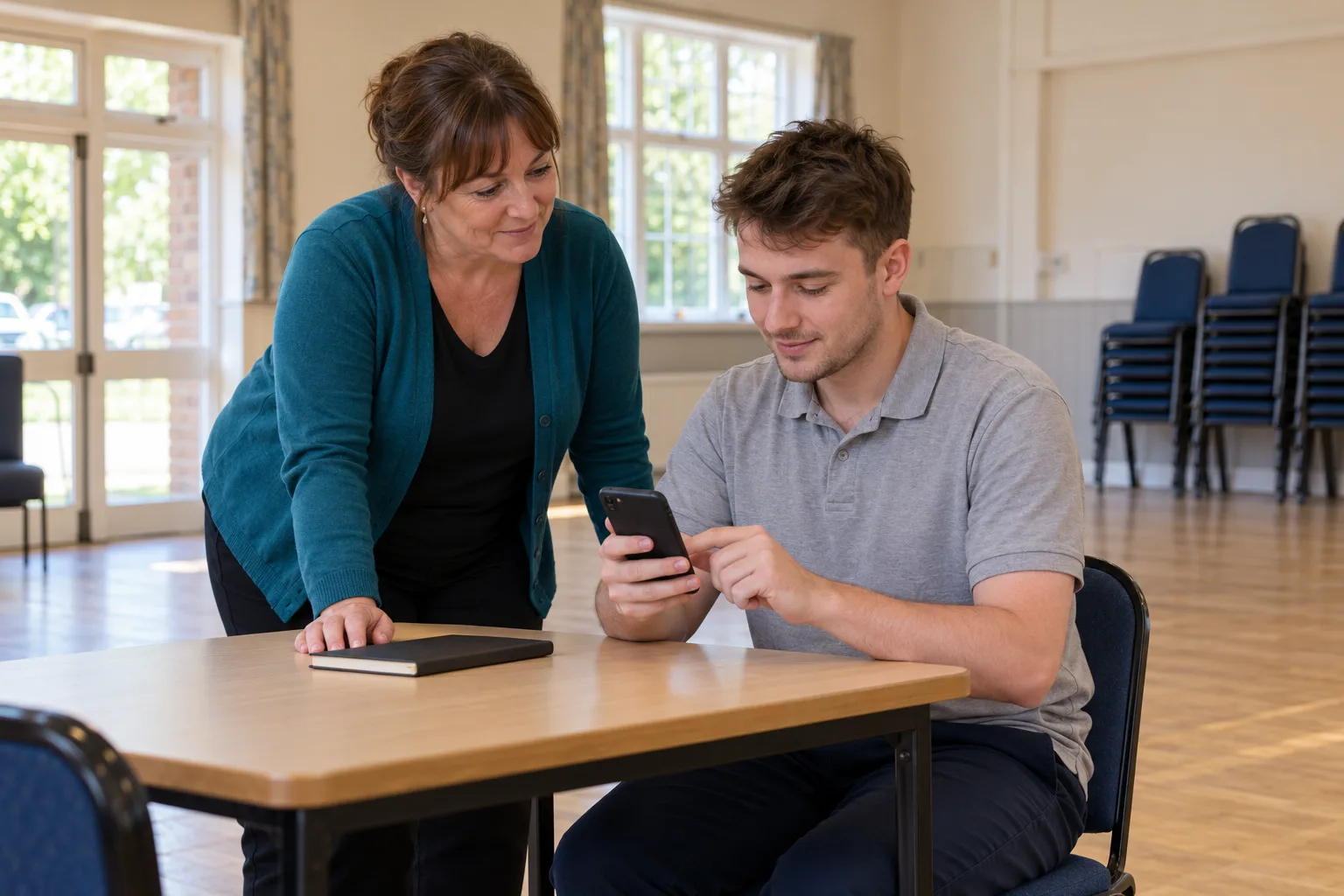
Consider a community venue in Middlesbrough preparing an assistant to carry out an agreed room-checking task without nearby colleagues. The assistant has read the instructions but has not yet practised using the contact arrangements.
The gap would be whether they can apply the instructions when interrupted. During supervised practice, the manager could introduce a hypothetical request to move heavy furniture that falls outside the agreed task. The assistant would need to explain how they would pause, seek advice and avoid treating the request as automatic permission.
The manager could then observe the assistant using LoneApp for a planned practice activity, checking the assigned responder and recognising the status of a check-in. Any uncertainty would be addressed with further explanation and practice before the assessed lone task was authorised.
The lesson is to check both judgement and operation. Correctly using a phone would not, by itself, demonstrate that the assistant can recognise when the work should stop.
Include the app’s limits in the practice
LoneApp’s worker guidance asks staff to check connection, permissions, battery and their assigned responder. It shows the next check-in and remaining activity time separately; check-ins count once the server confirms them.
Ask the worker to explain those points, rather than simply tapping through them. If practising an alarm, plan the exercise with managers and responders first and follow the current Support guidance. Do not assume a trial setting makes every test silent: controlled drills and requested connection tests can send messages.
Complete company readiness checks and test response arrangements before enabling live monitoring. LoneApp does not replace risk assessment, safe working or employer response arrangements, and does not include a staffed alarm receiving centre.
Record the next action
Keep a short record of the tasks practised, what the worker demonstrated, any gaps, the support needed and who will review readiness. Where an answer is unclear, explain it and repeat the relevant exercise. Agree when to revisit the training if the role or arrangements change.